BASALT

Platform dossier · Rev. 2026.08 · Haydamax OÜ

Infrastructure that runs itself.

BASALT is the control plane for physical operations. It holds a live twin of the whole site, reasons over it with a mesh of specialised agents, rehearses every change in simulation before it touches a machine — and hands the decision back to a person whenever the stakes demand it.

Standing directive · campus one

Increase output by 11% over the next 72 hours without exceeding the energy cap and without increasing safety risk.

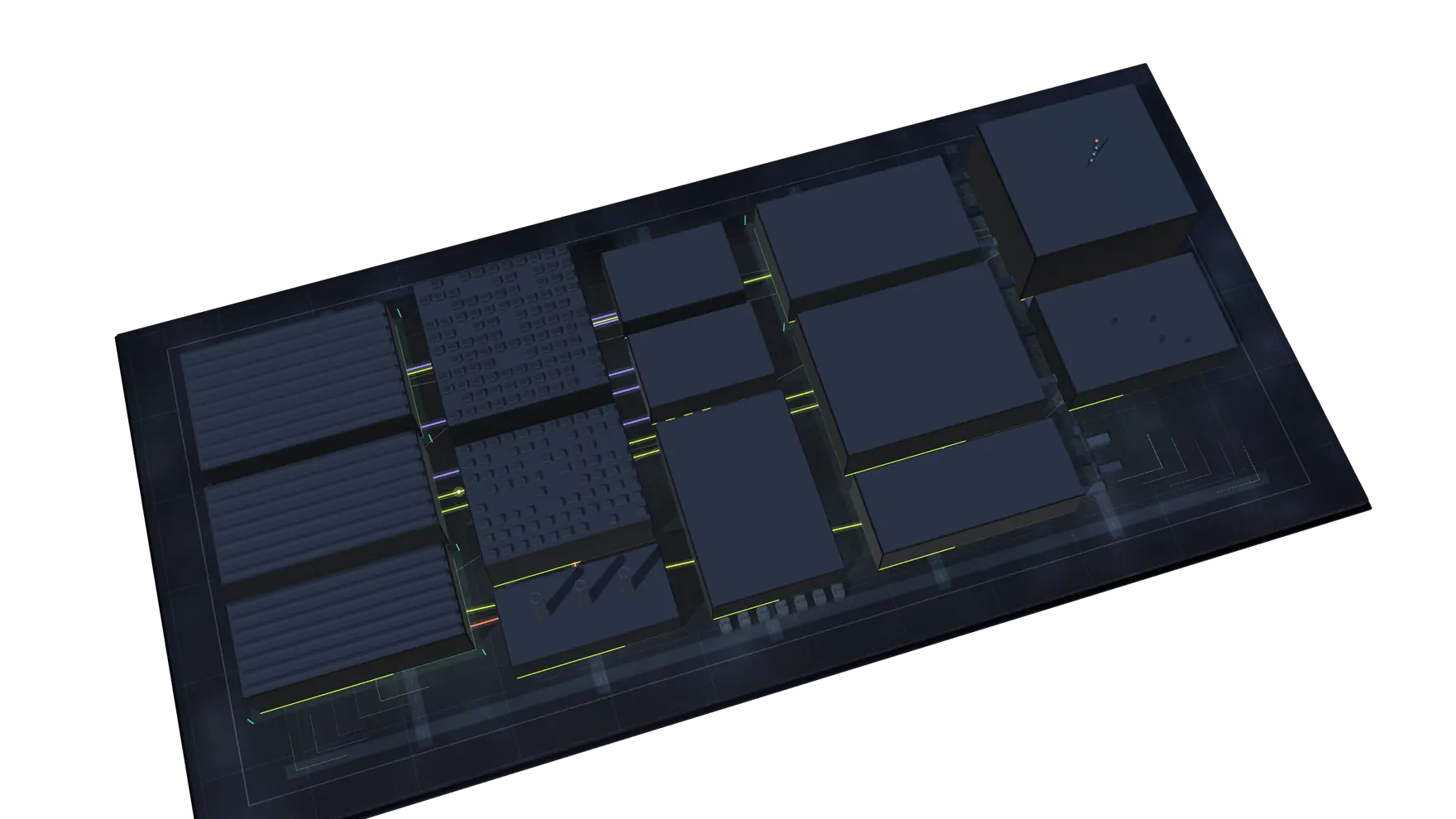
Fig. 1Campus telemetry field, plotted live. The blue pass is the simulator running one step ahead of the plant.
2,400robots and autonomous assets under task
180,000telemetry streams at 10 Hz
<100 mscritical-event response
99.999%control-plane availability

The premise

Software that talks is solved. BASALT is built for the part that isn't: perceiving a physical site, reasoning about what happens next, and acting on it — safely, continuously, and with its work shown.

§ 01

Console

You set the goal. It builds the plan.

An operator states an outcome, not a procedure. BASALT expands it into hundreds of candidate plans, plays each one forward in the twin, keeps the ones that satisfy every constraint, and executes the best of them across the fleet. This console runs the real loop shape on recorded campus behaviour.

Directive

Every run leaves an evidence trail: inputs, rejected plans, the constraint that killed each one, and who approved the survivor.

Observe
Simulate
Decide
Execute
Verify
Learn
Scenarios evaluated
Horizon
Constraint margin
State

Fig. 2Directive execution. Grey traces are rejected plans; the red trace is the one that survived every constraint.

§ 02

Digital twin

One campus, kept honest in software.

35,000 entities — buildings, cells, machines, robots, breakers, batteries, chillers, racks, pallets, people zones — each with live state, physics and history. The twin is not a picture of the site. It is the surface every agent reasons on, and the sandbox every plan is tried in first.

100 m N FAB-01 Robotic assembly hall 93% FAB-02 Machining and finishing 88% FAB-03 Battery pack line 71% DC-01 Compute hall A 84% DC-02 Compute hall B 62% THM-01 Cooling plant 75% ENR-01 Substation and switchyard 97% ENR-02 Battery storage 63% ENR-03 Solar field 57% LOG-01 Inbound and AMR depot 66% LOG-02 High-bay warehouse 72% LOG-03 Outbound yard 44% OPS-01 Operations centre 50% MNT-01 Robotics workshop 39%
Fig. 3Campus one, plan view. Bars show current utilisation per facility.
ManufacturingAI computeEnergyLogisticsOperationsAMR in transitEnergy flow

Hover or focus a building. Bars show current utilisation.

§ 03

Agents

Twelve specialists, one chain of command.

Each agent owns a domain, its own models and its own tools. They negotiate through the twin rather than through a chat window: a proposal is only real once it has been rehearsed and has cleared every other agent's constraints. The executive agent is the one that talks to people.

AgentAuthorityRemitNeeds a human for
OperationsSupervisory L3 Holds the directive and arbitrates between agents. Any change to the directive itself.
ProductionDomain L3 Re-sequences lines, cells and orders. Anything that misses a committed customer date.
RoboticsDomain L3 Tasks 2,400 robots and autonomous assets. Introducing a new robot class into a shared human zone.
EnergyDomain L3 Runs the microgrid against price and cap. Islanding the campus from the grid.
ThermalDomain L2 Cooling, heat reuse, envelope. Setpoint changes outside the agreed band.
MaintenanceDomain L2 Predicts failure, writes work orders. Taking a critical asset out of service during a committed run.
Supply chainDomain L2 Reacts to late or substituted components. Approving a substitute part.
QualityDomain L2 Inspects, detects drift, closes the loop. Releasing a quarantined batch.
SafetyGuardian L4 Vetoes anything that raises risk to people. Never overridden by software. Only a person can clear a safety hold.
SecurityGuardian L3 Segments, isolates, proves integrity. Anything that stops production to contain a threat.
SimulationService L1 Rehearses every plan before it is real. Nothing. It has no authority over the physical site.
ExecutiveInterface L1 Explains, requests approval, records. It exists to ask.

§ 04

The loop

Six steps, running continuously.

The loop is the product. Everything else — models, agents, twin, fleet — exists to keep it turning inside its latency budget.

Observe

180,000 streams, camera and LiDAR perception, controller state and people zones fused into one consistent picture of now.

10 Hz · edge

Simulate

Hundreds of candidate futures rehearsed against physics, traffic, thermal and process models before anything moves.

≤ 40 s · site

Decide

The plan that satisfies every hard constraint and best serves the directive. Rejections are kept with their reason.

≤ 2 s · site

Execute

Broken into machine-level tasks and dispatched to fleets, cells and the grid, with safe states pre-computed.

< 100 ms · edge

Verify

Reality is measured against the rehearsal continuously. Drift outside the envelope pauses the plan, not the plant.

250 ms · edge

Learn

Every deviation corrects the model that predicted it, so the next rehearsal starts closer to the truth.

per run · cloud

§ 05

Autonomy

Autonomy is a dial, not a switch.

Each domain sits at its own level, and moves up only after its predictions have matched reality for long enough to earn it. Nothing is autonomous because it shipped that way.

L0

Observed

The twin watches and reports. No proposals, no actions. This is where every new facility starts.

L1

Advisory

The system proposes plans with full reasoning. A person executes them by hand.

L2

Approved

The system builds and stages the plan; execution begins only after a named operator approves it.

L3

Supervised

Campus one runs here

The system executes inside a pre-agreed envelope and reports continuously. Any operator can hold, amend or reverse.

L4

Bounded

The system acts without waiting — only where waiting is the greater risk: safety stops, containment, ride-through.

What holds it in

Deterministic fallback

Every cell keeps a controller that runs the process without any AI in the path. Losing the control plane costs optimisation, not production.

Constraint kernel

Hard limits — separation, force, temperature, import cap, permits — are enforced outside the models, and no agent can argue with them.

Rehearsal before reality

No plan reaches hardware that has not been played forward in the twin and cleared by the safety agent.

Evidence by default

Inputs, rejected options, the binding constraint, the approver and the outcome are recorded for every decision, and exportable for audit.

Standards as a floor

IEC 62443 zones and conduits, ISO 10218 and ISO/TS 15066 for collaborative operation, and the NIST AI Risk Management Framework for the agent layer.

§ 06

Architecture

Three tiers, one state.

Latency decides where code runs. Anything that can stop a machine runs metres from it; anything that needs the whole campus runs on site; anything that learns across sites runs in the cloud.

Edge

In the cell · < 100 ms

Perception, control and safety logic on ruggedised nodes next to the machines. Runs headless if the site link drops.

ROS 2PROFINETEtherCATOPC UAMQTT SparkplugTSNCUDA / TensorRT

Site

Campus control plane · seconds

The twin, the agent mesh, the simulation farm and the decision record. Active-active across two compute halls.

Digital twinAgent meshSimulation farmEvent streamingTime-series storeZero-trust segmentation

Cloud

Fleet learning · minutes to hours

Model training, cross-site benchmarking, long-horizon planning and the release pipeline that promotes a model only after it beats the incumbent in replay.

Model trainingReplay evaluationFleet benchmarkingSigned releasesLong-term evidence archive

§ 07

Deployment

One campus, fourteen facilities, running now.

BASALT was built as a portable autonomy platform and proven on a single hard case: a robotic manufacturing and AI-compute campus with its own microgrid and its own logistics yard.

1campus under a single control plane
14facilities: manufacturing, compute, energy, logistics
2,400robots and autonomous assets
180,000telemetry streams
35,000digital-twin entities
12AI agents in the mesh
24/7autonomous operation
< 100 mscritical-event response
99.999%control-plane availability

Bring a site under BASALT.

Deployment starts at L0: we instrument the site, stand up the twin and run it in observation for one production cycle. You see the system predict your plant before it is allowed to touch it.

Typical first phase: twelve weeks from instrumentation to a twin that tracks the site within its verification envelope.